When Food Looks Perfect Online but Feels Different on the Plate

By- Dr Sourya Rongala, Paari School of Business, SRM University -AP
You open a food delivery app late at night. A glossy bun, perfectly melted cheese, crisp lettuce standing tall like a television commercial blink on your mobile screen. It looks irresistible. You order instantly.
Thirty minutes later, the burger arrives.
Nothing is technically wrong with it. It is warm, edible, and perhaps even tasty. Yet something feels disappointing. Somewhere your taste buds aren’t satisfied.
Increasingly, the problem may not be the food itself. It may be the high expectation created before the first bite.
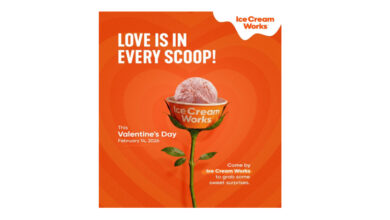
Artificial Intelligence is quietly transforming the restaurant industry, not through robot chefs or futuristic kitchens, but through images. Restaurants today can generate visually stunning food photographs using AI tools that make dishes appear richer, fresher, brighter, and more “perfect” than reality often allows.
And consumers are beginning to compare real meals to digitally perfected ones.
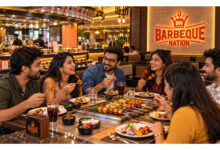
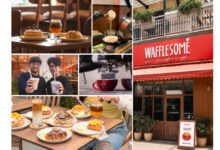
For decades, food marketing has relied on visual appeal. Restaurants have always styled dishes carefully for advertisements and menu cards. But AI changes the game because it removes the limits of ordinary photography. A curry can appear silkier than it ever would during a busy dinner rush. Fries can remain perfectly crisp forever. Desserts can glow under impossible lighting. Even café interiors can be digitally transformed into dreamy spaces untouched by noise, crowds, or human chaos.
In many ways, restaurants are entering an era of synthetic perfection.
The issue is not necessarily deception. Most restaurants are not trying to fool customers. In fact, many are simply responding to intense digital competition where attention spans last only seconds. In a crowded marketplace, attractive visuals drive clicks, orders, and engagement.
But collectively, something deeper is happening.
AI-generated imagery is quietly reshaping customer expectations before the dining experience even begins.
Psychologists have long argued that expectations influence satisfaction. We do not experience products objectively; we compare them against what we anticipated. In restaurants, customers increasingly “consume” the image first and the food later.
This is especially true in food delivery platforms where customers cannot smell the food, observe the ambiance, or interact with staff before ordering. The image becomes the experience before purchase. Taste comes afterward.
That shift matters because restaurants are now being judged not only on food quality, but also on how closely reality matches a digitally engineered expectation.
This creates what businesses may soon recognize as a new kind of customer dissatisfaction: perceptual service failure.
Traditionally, service failure meant cold food, poor hygiene, or slow service. But today, dissatisfaction can emerge even when operations are acceptable — simply because the customer expected something more visually dramatic, luxurious, or emotionally satisfying.
In other words, visual perfection may be inflating expectations faster than real kitchens can realistically fulfil them.
Ironically, this may create a future where authenticity becomes more valuable than perfection.
Already, many consumers are gravitating toward restaurants that feel genuine rather than flawlessopen kitchens, rustic plating, local storytelling, handwritten menus, and food that looks believable rather than digitally enhanced. In a world flooded with synthetic visuals, honesty itself becomes memorable.
This does not mean restaurants should stop using AI. The technology is powerful, accessible, and likely to become a permanent part of modern marketing. But businesses may need to ask a more important question: should AI be used to impress customers, or to accurately represent the experience they are about to have?
Because the long-term risk is not simply unrealistic food photography. It is the gradual erosion of trust between what customers see online and what they experience offline.
The future winners in the restaurant industry may not be the brands that create the most visually perfect images. They may be the ones that create the smallest gap between digital promise and real-world experience.
After all, when expectations are shaped by artificial intelligence, reality itself begins competing with fiction.